Climate Change and Its Consequences for India
Atmospheric climate of a place or a region is the ‘weather’ averaged over large areas and periods, for (say) 20-30…

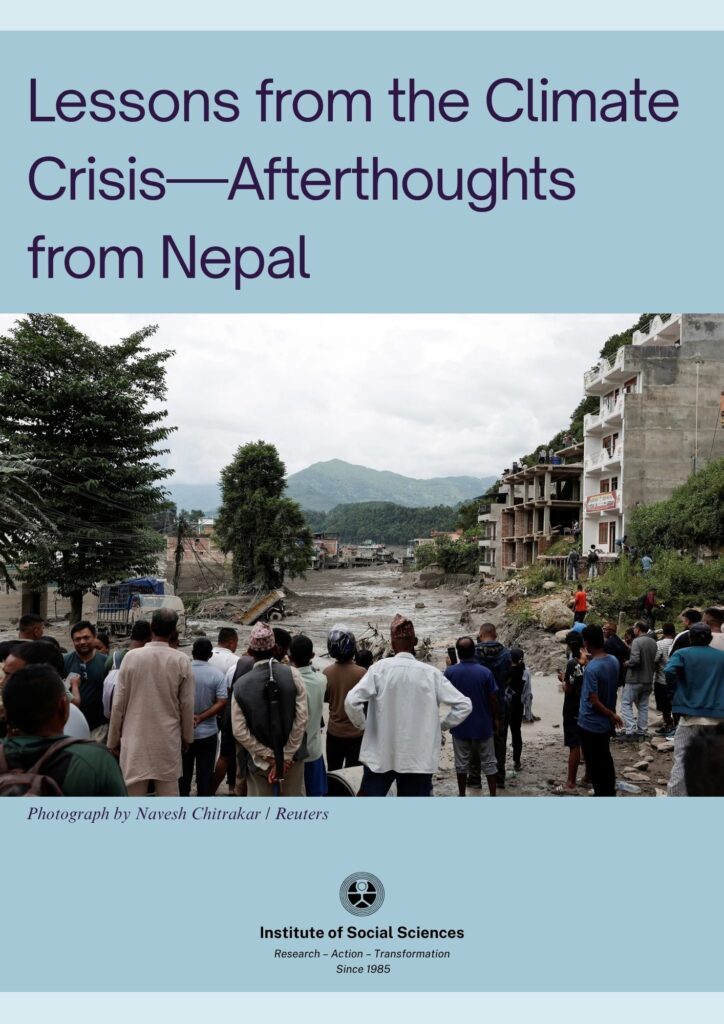 The latest disaster in Nepal and Tibet has given the world a much-needed wake up call. A likely reason for the tragic landslide and flash flooding was the collapse of a mel ng glacier in the Himalayas. This is clearly a direct consequence of global warming. For years, the UN has been warning us about the climate crisis and the threat of mel ng glaciers and permafrost due to rapid urbaniza on, industrializa on, and fossil fuel use. The Himalayas have already lost almost a third of their ice in just over 30 years due to global rise in temperatures. Experts have noted that the recent landslide in Nepal was exacerbated due to heatwaves and spiking ground temperatures.
This is not a regional or na onal issue. The Global South has historically been paying the price for pollu on caused by the Global North. Nepal is just one of the examples of countries that contribute li le to global pollu on but are forced to pay the price for it. For instance, we tend to focus on the immense humanitarian and economic harm caused by armed conflicts, but fail to no ce that greenhouse gas emissions caused by military opera ons should also be seen as an equally grave harm. Nepal has thus demanded that major emi ers compensate it for the damage caused by climate change. Another disparity is revealed when environmental pollu on is more acutely felt by the economically weaker sec on of society. They are most vulnerable to issues like drinking water shortage, contamina on, plas c pollu on, etcetera, and are especially exposed to the damage caused by catastrophic disasters.
This argument forces us to ques on: Can climate-related disasters be prevented? The answer requires a more nuanced understanding of what segregates natural disasters from human-made disasters. The main indicator of human-made disaster cannot be iden fied through causality alone. There are also factors such as scale and frequency at play. It is a fact the threat posed by global warming is very much real. Nothing short of immediate and focused ac on from world leaders can undo the damage already caused. But climate ac on needs to sustained over decades before we start seeing posi ve change. Human-induced climate change is caused due to over-exploita on of natural resources and excessive pollu on that disrupts natural cycles, thereby affec ng rainfall, atmospheric environment, and the like. The goal should be to lessen these adverse effects caused by humans—such as by tracking carbon footprint and adop ng green energy. Natural disasters will con nue to persist as shi ing tectonic plates and rising water levels are natural, inevitable events. Rivers will naturally change course over me, and wildfires may spark due to natural events such as lightning strikes. Controlling pollu on and global warming will help in stabilising this natural cycle so that they do not become frequent and unpredictable. For example, we already know through scien fic predic ons that a glacial origin flood is expected in the Hindu Kush Himalaya region once every five to ten years. This is a natural occurrence. However, the region has already faced three floods last year within a span of a few months. This is a major indicator of the way climate change worsens the scale of natural disasters.
The Nepal flood also serves as a warning for us in India—our neighbour’s Himalayan rivers feed several major Indian river systems which reach flood-prone states like Bihar. Disasters like this in the Himalayan region thus becomes a shared concern. India is geographically quite vulnerable to floods, earthquakes, tsunamis, and so on. We have already seen the effects of the climate crisis through recent heatwaves and floods. For us, climate ac on should not end at controlling pollu on. Disaster management systems are cri cal to saving as many lives as possible. When disasters become unpredictable and overwhelming, warning and evacua on systems needs to be updated accordingly. In the a ermath of the flood in Nepal, significant gaps in the state mechanisms were uncovered. Warnings issued were either failed to deliver the urgency of the situa on or could not reach some people. It was at this cri cal juncture where community-level communica ons became a lifeline. Quick evacua on can only be possible with trusted informa on and clear instruc ons. Reliance on digital alerts slowed mely ac on. Apart from upda ng sensors and communica on channels in accordance to the severity of these disasters, we also need to strengthen public awareness and community-level connec ons. Top-down alerts o en run the risk of being ignored or reaching recipients too late. Readily available informa on at the community level from trusted local sources are much more effec ve when it comes to execu ng quick evacua on plans, especially in dangerous terrain with sca ered popula on.
Informa on regarding local safe grounds, evacua on routes, reliable contact persons and volunteers, is readily available to local authori es. Providing them the resources, training and responsibility to make plans can make disaster management systems more efficient and robust. When the communi es are not just passive recipients of awareness campaigns, but involved in the making of evacua on plans and precau ons, there is a lesser risk of panic and confusion when disaster strikes.
Disasters are a call to ac on for community resilience and strength first and foremost—we need all hands on deck for disaster management with the same rigour and concern we have when it comes to overturning climate change.